






 Trap
 Normal
Call of the Earthbound
Archetype:
Earthbound
View:
4178
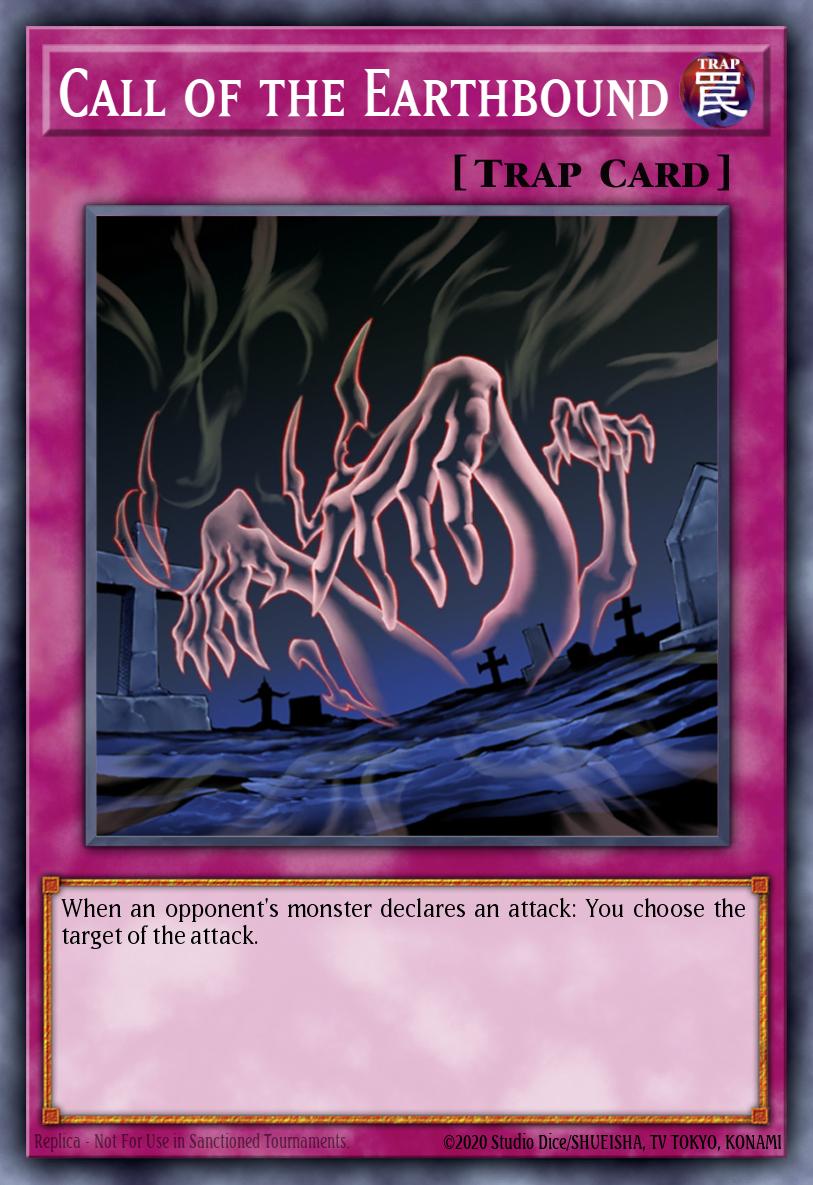
When an opponent's monster declares an attack: You choose the target of the attack.
Call of the Earthbound — Power Evaluation
Final Score: 49 ± 8 · Confidence: Medium
- Intrinsic: 47 · Deck: 50 · Meta: provisional
- Primary role: Negation/Interaction · Secondary: Utility
Why it scores here
Call of the Earthbound is a reactive trap that redirects one opposing attack to a target the controller chooses. It converts no resources and builds no board, so its score comes from interaction and cheap deck slot use, not from any combo line. It is played as a single copy in 31 sampled decks across 14 archetypes, which supports a real, portable role, but that frequency only confirms accessibility and does not raise the score. No combo evidence exists, so combo conversion stays low, and the card cannot serve as material.
Axis scores
| Axis | Score | Evidence |
|---|---|---|
| Accessibility | 55 | A face-down trap that appears in 31 sampled decks (93.5% in one gameplay type) but has no starter or searched-line data (observed; set-and-wait access is inferred). |
| Combo & Conversion | 20 | Redirecting an attack builds nothing on its own and no combo boards were supplied (inferred from text). |
| Resource Economy | 10 | No card advantage, draw, or refuel in the text (verified). |
| Effect & Interaction | 45 | Redirects one attack to a chosen target, which is soft and situational rather than a negate or removal (inferred from text). |
| Material Utility | 0 | Not a monster, so it cannot be used as material (verified from card type). |
| Resilience & Flexibility | 35 | Trap-zone card that can be destroyed or negated before use and is a single copy per deck (inferred). |
| Deck-Building Efficiency | 72 | Single-copy generic trap with no garnet or lock restriction, easy to run in many decks (observed from copies distribution). |
Calculation
Weight profile: Primary role Negation/Interaction (Removal / Negation row); no secondary blend applied. Intrinsic ≈ 47, Deck ≈ 50, Meta = provisional. Modifiers: none. Final formula: 0.40*Intrinsic + 0.60*Deck
Strengths
- Cheap, single-copy trap that fits many archetypes (14 distinct in the sample)
- Gives a defensive redirect option against a single attack without costing card advantage
- Clean text with no garnet or self-lock restriction
Weaknesses
- Only redirects one attack; it does not negate, destroy, or stop effects
- Set-and-wait trap is vulnerable to backrow removal and negation
- No recorded combo or starter evidence to show it converts into board or advantage
Counters / choke points
- Backrow destruction or trap negation before the attack is declared
- Attacks that cannot be redirected or that target the controller directly
Best use
Single-copy defensive redirect in a backrow slot. Decks: Eldlich, Red-Eyes. Suggested copies: 1.
Evidence & gaps
- Verified: Trap card that redirects an opponent's attack to a chosen target (card text); Cannot be material because it is not a monster (card type); 31 decks run it with 93.5% in one gameplay type (deck data)
- Observed: Present in 31 sampled decks across 14 archetypes with 1 copy in 29 of them (deck data); Top partners include Zoma the Spirit and Harpie's Feather Duster in about 70% of decks (deck data)
- Inferred: Soft interaction role, not negation or removal (from text); Set-and-wait access is reliable enough for a 1-copy trap (inferred)
- Data gaps: no combos supplied — combo conversion is text-only inference no guides supplied no banlist token — assumed 3 copies (unlimited) no usage statistics (StatisticsCard) — archetype inclusion % inferred from deck sample only no rulings supplied for attack redirection timing